Musical Intervals 1
The following approaches this ear training, a few intervals at a time.
As you learn to recognize them, move on to the next ones.
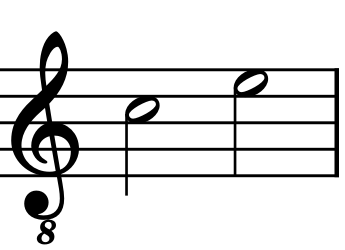
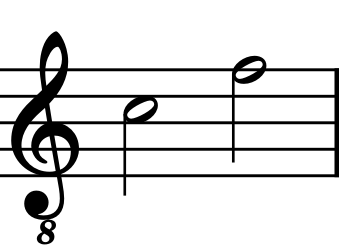
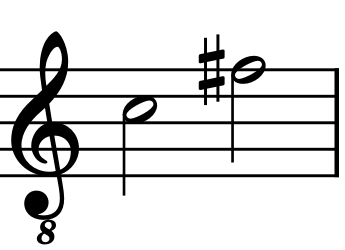
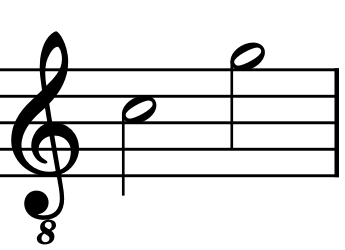
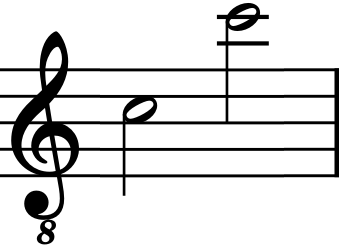
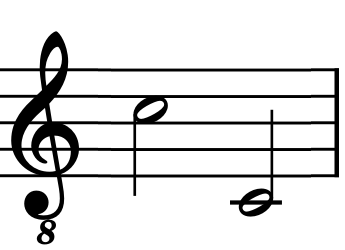
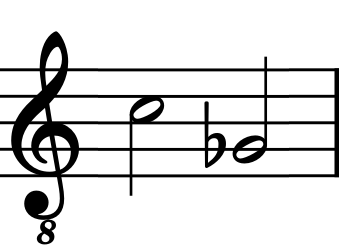
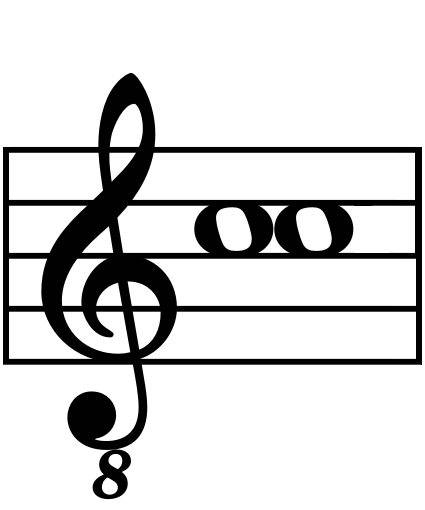
We begin with just three, the unison, octave and tritone.
Listen to them, then proceed to the Quizzes, where you listen the guess which is correct.
Few can name a note by just hearing it. But most can learn to name the intervals between notes.
But first a mention of what these intervals are.
Our chromatic scale has 12 tones, and repeats many times. From one tone to the next is called a half-step, or semitone, and represented by 'S' at times. This is the smallest interval.
To sharp a note means to move one half-step up in pitch. To flat a note means to move down instead.
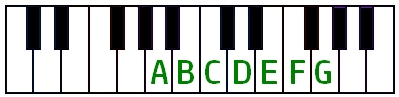 We use the letters A-G along with sharp or flat symbols to name all the 12 tones. As they repeat, a number may be added to specify which is meant, like C1 or C2, etc. All with the same 'letter' form a 'pitch class' like C3 and C5 are of the same 'C pitch class'.
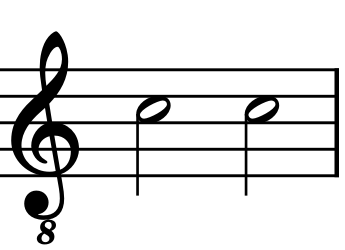
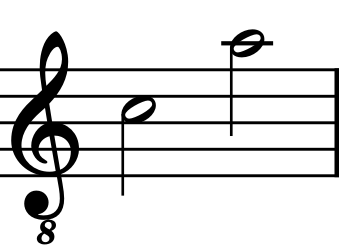
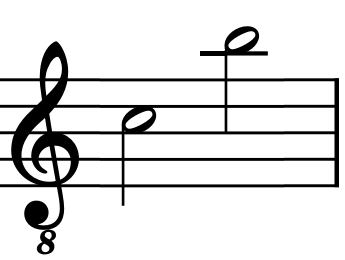
The word 'octave' is used to indicate moving up one pitch class, like from C1 to C2. While 'unison' is used to indicate two of the same exact pitch such as C1 and C1.
Here is a table of the intervals within a single octave:
The Intervals, starting with C.
Select the interval to hear how it sounds.
All of these use C as the tonic or root, included in each of these intervals.
Hover over each to see their names.
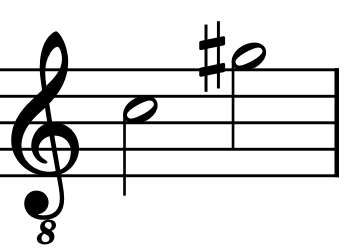
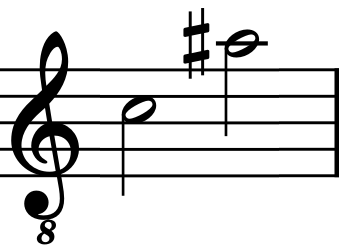
We begin with just three intervals, the Unison, Tritone and Octave.
Intervals and inversions tests in the key of C
Note:
When wrong, selecting a second or third answer which is correct will increase your score.
For an accurate score, choose only one answer per test question.
Click Button to Reset Score to zero.
Your current score is: 0% correct.
Quiz 1
Click the ? ? ? to listen to the interval
Click below, naming the interval.
Your current score is: 0% correct.
Quiz 2
Click the ? ? ? to listen to the interval
Click below, naming the interval.
Your current score is: 0% correct.
Quiz 3
Click the ? ? ? to listen to the interval
Click below, naming the interval.
Your current score is: 0% correct.
Quiz 4
Click the ? ? ? to listen to the interval
Click below, naming the interval.
Your current score is: 0% correct.
Quiz 5
Click the ? ? ? to listen to the interval
Click below, naming the interval.
Your current score is: 0% correct.
Quiz 6
Click the ? ? ? to listen to the interval
Click below, naming the interval.
Intervals may be inverted.
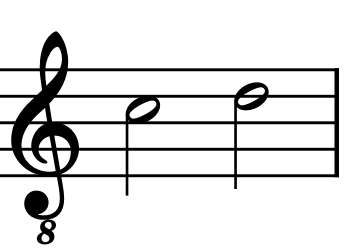
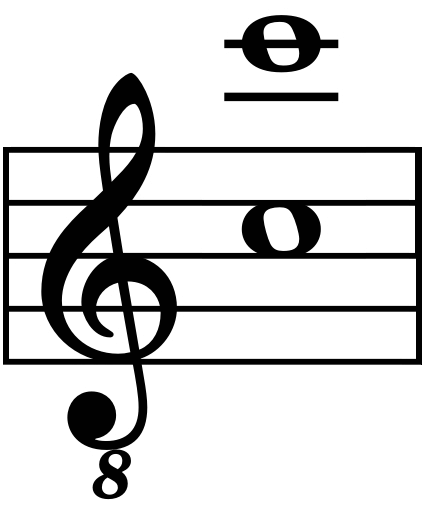
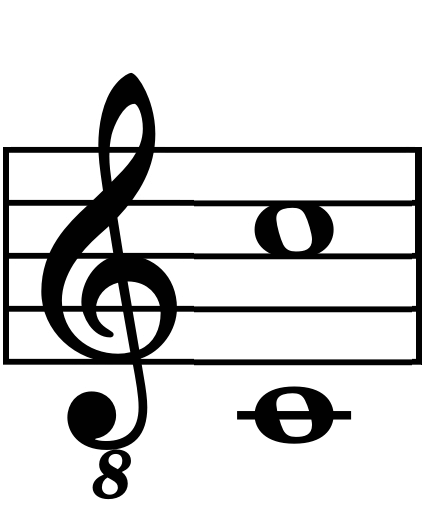
The inversions of the three we just looked at have the same names as the non-inverted intervals. From C3 to C4 is an octave, but so is C2 to C3.
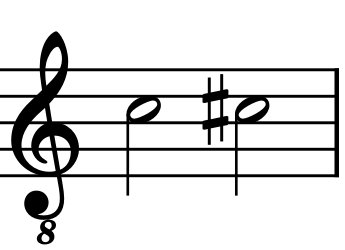
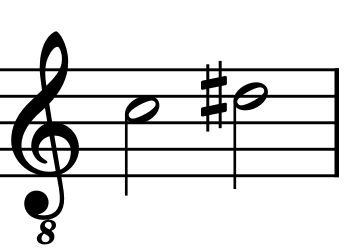
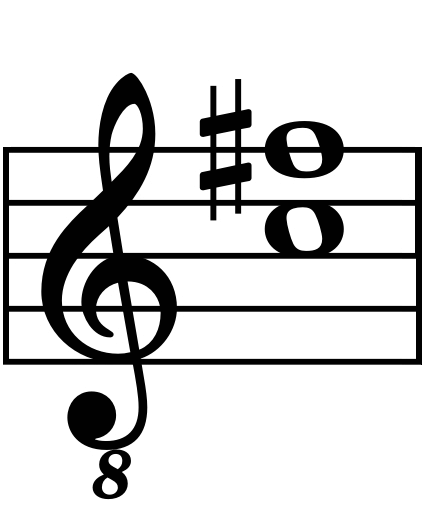
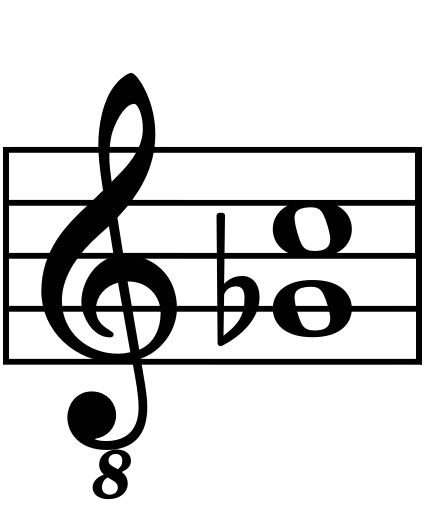
And our tritone (C to F♯) is in the very center of the diatonic scale, so inverted (G♭ to C) it remains a tritone as well. ...Note that F♯ and G♭ are enharmonic, meaning they are the same tone but one spelled as flat and the other as sharp.
These sound the same as 'intervals', but are just an octave lower.
Selecting the wrong inversion as on the staff will still be counted as correct, as technically it is still a tritone or octave. One would be called an octave or tritone above, the other an octave or tritone below.
Your current score is: 0% correct.
Quiz 7
Click the ? ? ? to listen to the interval
Click below, naming the interval.
Your current score is: 0% correct.
Quiz 8
Click the ? ? ? to listen to the interval
Click below, naming the interval.
Your current score is: 0% correct.
Quiz 9
Click the ? ? ? to listen to the interval
Click below, naming the interval.
Your current score is: 0% correct.
Quiz 10
Click the ? ? ? to listen to the interval
Click below, naming the interval.
Your current score is: 0% correct.
Quiz 11
Click the ? ? ? to listen to the interval
Click below, naming the interval.
Your current score is: 0% correct.
Quiz 12
Click the ? ? ? to listen to the interval
Click below, naming the interval.
Your current score is: 0% correct.
Quiz 13
Click the ? ? ? to listen to the interval
Click below, naming the interval.
Your current score is: 0% correct.
Quiz 14
Click the ? ? ? to listen to the interval
Click below, naming the interval.
We began with just three intervals, the Unison, Tritone and Octave.
But intervals can also be sounded together at the same time, not just as one note after the other.
Intervals may be inverted when sounded together too.
Your current score is: 0% correct.
Quiz 15
Click the ? ? ? to listen to the interval
Click below, naming the interval.
Your current score is: 0% correct.
Quiz 16
Click the ? ? ? to listen to the interval
Click below, naming the interval.
Your current score is: 0% correct.
Quiz 17
Click the ? ? ? to listen to the interval
Click below, naming the interval.
Your current score is: 0% correct.
Quiz 18
Click the ? ? ? to listen to the interval
Click below, naming the interval.
Your current score is: 0% correct.
Quiz 19
Click the ? ? ? to listen to the interval
Click below, naming the interval.
Your current score is: 0% correct.
Quiz 20
Click the ? ? ? to listen to the interval
Click below, naming the interval.
Your current score is: 0% correct.
Quiz 21
Click the ? ? ? to listen to the interval
Click below, naming the interval.
Your current score is: 0% correct.
Quiz 22
Click the ? ? ? to listen to the interval
Click below, naming the interval.
Your current score is: 0% correct.
Quiz 23
Click the ? ? ? to listen to the interval
Click below, naming the interval.
Your current score is: 0% correct.
Quiz 24
Click the ? ? ? to listen to the interval
Click below, naming the interval.
Your current score is: 0% correct.
Quiz 25
Click the ? ? ? to listen to the interval
Click below, naming the interval.
Your final score is: 0% correct.