Musical Intervals 4
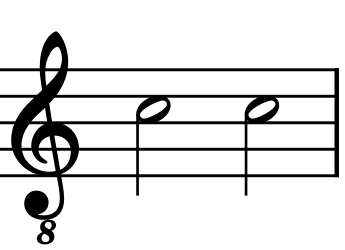
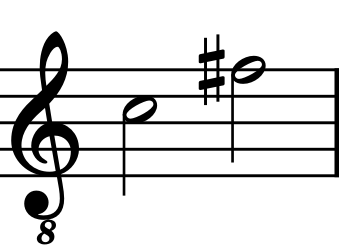
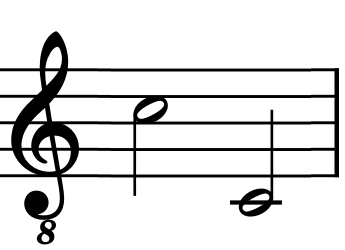
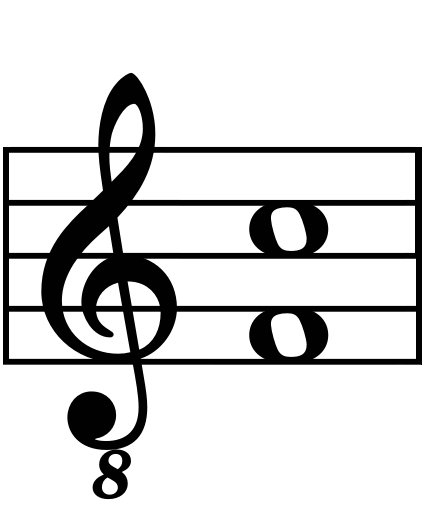
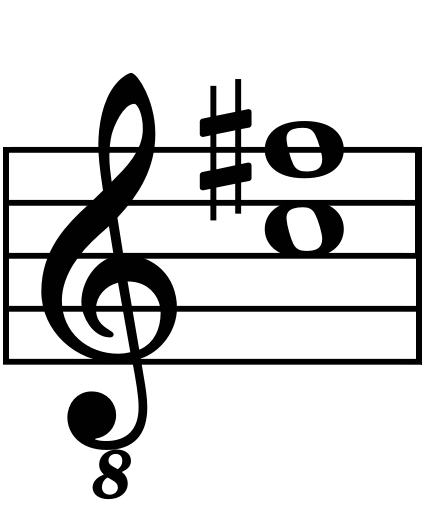
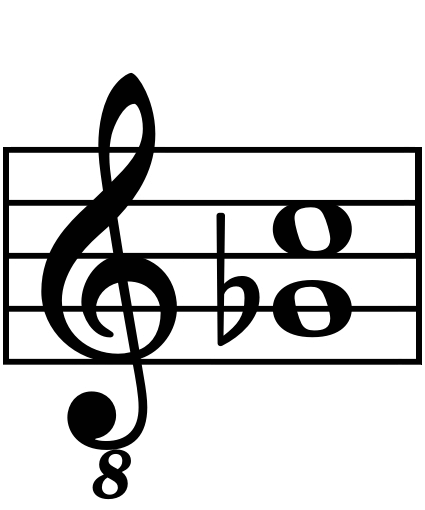
Having learned the Unison, Tritone, Octave, Perfect Fourth, Perfect Fifth, Major Third and Minor Sixth we add two more.
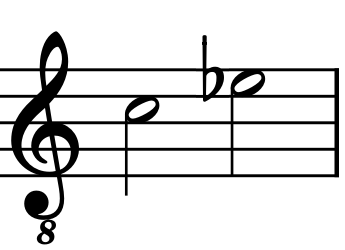
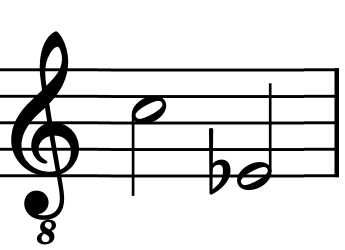
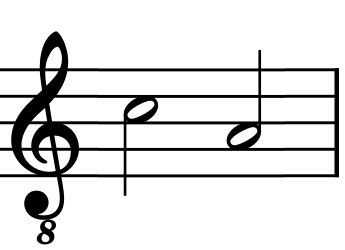
The Intervals of a Minor Third and a Major Sixth.
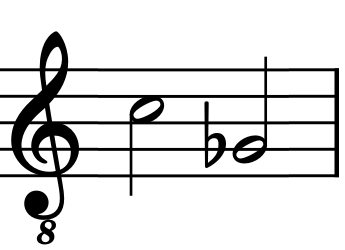
One semitone below the Major Third is the Minor Third, and one above the Minor Sixth is the Major Sixth.
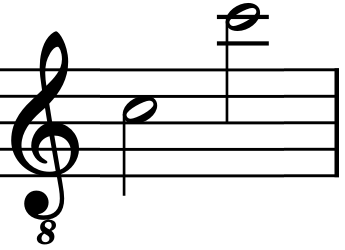
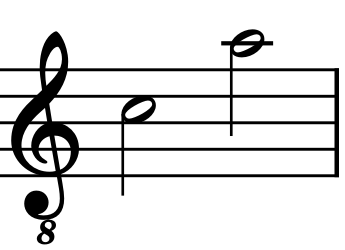
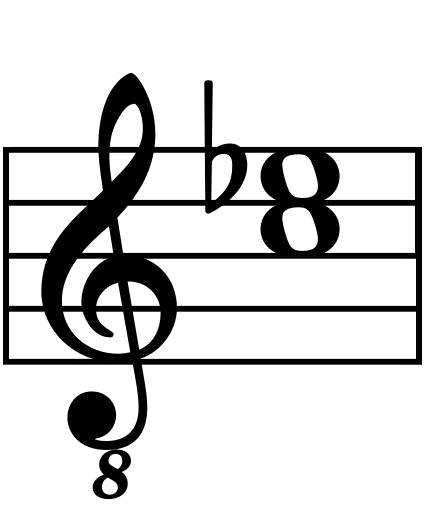
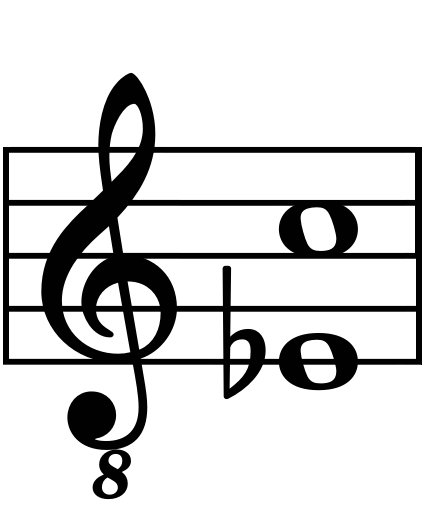
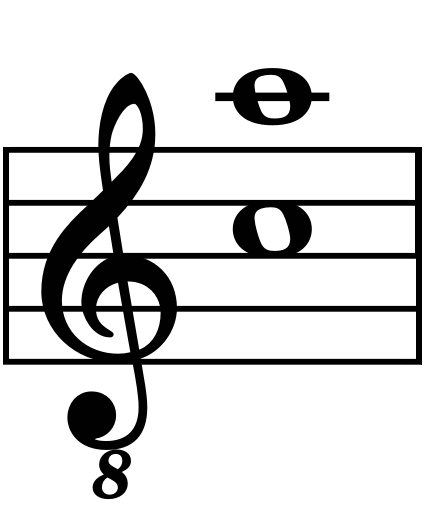
These are Inversions of each other. From C to E♭ is a Minor Third. From C to A is a Major Sixth.
But from E♭ to C is a Major Sixth, and from A to C is a Minor Third.
What we call them depends on what the starting or reference note is. If in the key of C, then E♭ is the Minor Third, and A is the Major Sixth. This would apply even if these notes were lower then the C, or in different octaves.
Terminology can be confusing in this way, but if not refering to a key, tonic or root, and just refering to the two notes, we would name them based on starting with the first note.
Intervals and inversions quiz in the key of C
Note:
When wrong, selecting a second or third answer which is correct will increase your score.
For an accurate score, choose only one answer per quiz question.
Click Button to Reset Score to zero.
Your current score is: 0% correct.
Quiz 1
Click the ? ? ? to listen to the interval

Click below, naming the interval.
Your current score is: 0% correct.
Quiz 2
Click the ? ? ? to listen to the interval
Click below, naming the interval.
Your current score is: 0% correct.
Quiz 3
Click the ? ? ? to listen to the interval
Click below, naming the interval.
Your current score is: 0% correct.
Quiz 4
Click the ? ? ? to listen to the interval
Click below, naming the interval.
Your current score is: 0% correct.
Quiz 5
Click the ? ? ? to listen to the interval
Click below, naming the interval.
Your current score is: 0% correct.
Quiz 6
Click the ? ? ? to listen to the interval
Click below, naming the interval.
Your current score is: 0% correct.
Quiz 7
Click the ? ? ? to listen to the interval
Click below, naming the interval.
Your current score is: 0% correct.
Quiz 8
Click the ? ? ? to listen to the interval
Click below, naming the interval.
Intervals may be inverted.
They will be labeled one of two ways here.
If labeled a Minor Third or a Major Sixth, it is in reference to the interval below the first tone.
If labeled a a Minor Third (inv.) or a Sixth (inv.), it is in reference to the the first tone regardless of octave.
From tonic (1st scale degree) to the Minor Third degree (as in from C to E♭) is a total of 3 semitones.
From tonic (1st scale degree) to the Major Sixth degree (as in from C to A) is a total of 9 semitones.
Again, this can be tricky. They are inversions of each other so what you want to train your ear (and mind) to is not just the the difference in pitch, but the direction, and refereance tone. More than anything this is about communicating with others. If you say "a Minor Third" with reference to a key such as C, it will always be an E♭, regardless of octave. However, if you say "a Minor Third below C", you imply 3 descending semitones, which would be an A instead.
In hearing just the tones as on the quiz, there may be two correct answers, an inversion of an interval, and a descending interval. Such is the nature of all the interval inversions ...excepting the octave and tritone.
Your current score is: 0% correct.
Quiz 9
Click the ? ? ? to listen to the interval
Click below, naming the interval.
Your current score is: 0% correct.
Quiz 10
Click the ? ? ? to listen to the interval
Click below, naming the interval.
Your current score is: 0% correct.
Quiz 11
Click the ? ? ? to listen to the interval
Click below, naming the interval.
Your current score is: 0% correct.
Quiz 12
Click the ? ? ? to listen to the interval
Click below, naming the interval.
Your current score is: 0% correct.
Quiz 13
Click the ? ? ? to listen to the interval
Click below, naming the interval.
Your current score is: 0% correct.
Quiz 14
Click the ? ? ? to listen to the interval
Click below, naming the interval.
Minor Thirds and Major Sixths as a Dyads or Double Stops.
There is no mention of Descending here, as these intervals are not played in sequence.
Note also that they are in the key of C, So the E♭ is always a Minor Third and The A always a Sixth regardless of octave.
Your current score is: 0% correct.
Quiz 15
Click the ? ? ? to listen to the interval
Click below, naming the interval.
Your current score is: 0% correct.
Quiz 16
Click the ? ? ? to listen to the interval
Click below, naming the interval.
Your current score is: 0% correct.
Quiz 17
Click the ? ? ? to listen to the interval
Click below, naming the interval.
Your current score is: 0% correct.
Quiz 18
Click the ? ? ? to listen to the interval
Click below, naming the interval.
Your current score is: 0% correct.
Quiz 19
Click the ? ? ? to listen to the interval
Click below, naming the interval.
Your current score is: 0% correct.
Quiz 20
Click the ? ? ? to listen to the interval
Click below, naming the interval.
Your current score is: 0% correct.
Quiz 21
Click the ? ? ? to listen to the interval
Click below, naming the interval.
Your current score is: 0% correct.
Quiz 22
Click the ? ? ? to listen to the interval
Click below, naming the interval.
Your current score is: 0% correct.
Quiz 23
Click the ? ? ? to listen to the interval
Click below, naming the interval.
Your current score is: 0% correct.
Quiz 24
Click the ? ? ? to listen to the interval
Click below, naming the interval.
Your current score is: 0% correct.
Quiz 25
Click the ? ? ? to listen to the interval
Click below, naming the interval.
Your final score is: 0% correct.